
How an Auto Accident Claims Lawyer Protects Your Legal Rights
Navigating the aftermath of a motor vehicle collision can quickly become overwhelming. While you are trying to heal, schedule doctor appointments, and arrange alternative transportation, insurance companies are already working to limit their payouts. Retaining a dedicated auto accident claims lawyer levels the playing field and ensures your rights remain protected throughout every stage of the legal process.
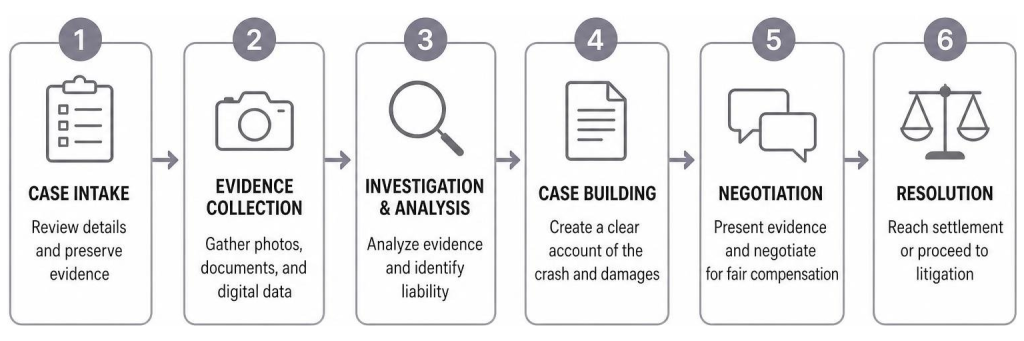
When you hire Eisbrouch Marsh, we immediately take over all communications with insurance adjusters, defense attorneys, and bill collectors. We launch an independent investigation into the crash to gather vital physical and digital evidence before it is lost or destroyed. Our priority is building a compelling case that clearly establishes liability and demonstrates the full extent of your physical, emotional, and financial losses. Learn more about pursuing justice after a car accident to see how strategic legal action holds negligent drivers accountable.
What Does an Auto Accident Claims Lawyer Do?
Many people assume a lawyer only steps in if a case goes to court. In reality, the vast majority of personal injury claims are resolved through detailed negotiation long before a courtroom trial becomes necessary. An experienced New Jersey auto accident claims lawyer performs several critical roles behind the scenes, including:
- Policy and Coverage Analysis: We thoroughly analyze all available auto insurance policies—including your own coverage and the driver’s policy—to locate every available source of financial recovery.
- Establishing Legal Liability: Proving who caused a collision requires concrete evidence. We evaluate police crash reports, interview eyewitnesses, review traffic and dashcam footage, and consult crash reconstruction experts when necessary.
- Managing Insurer Communications: Insurance adjusters are trained to ask misleading questions designed to coax you into admitting partial fault or minimizing your pain. We shield you from these tactics by handling all recorded statements, phone calls, and written correspondence.
- Calculating Total Claim Value: We work alongside medical doctors, economic experts, and life-care planners to calculate not just your current unpaid bills, but your future medical requirements and reduced long-term earning potential.
- Litigation and Trial Preparation: If the insurance provider refuses to offer a fair settlement, we prepare a formal lawsuit and advocate aggressively on your behalf in court.
Contingency Fee Structure and Legal Costs
One of the biggest concerns crash victims face is the potential cost of hiring legal representation. Fortunately, personal injury law operates differently than most legal fields. At Eisbrouch & Marsh, LLC, we handle motor vehicle accident claims on a contingency fee basis.
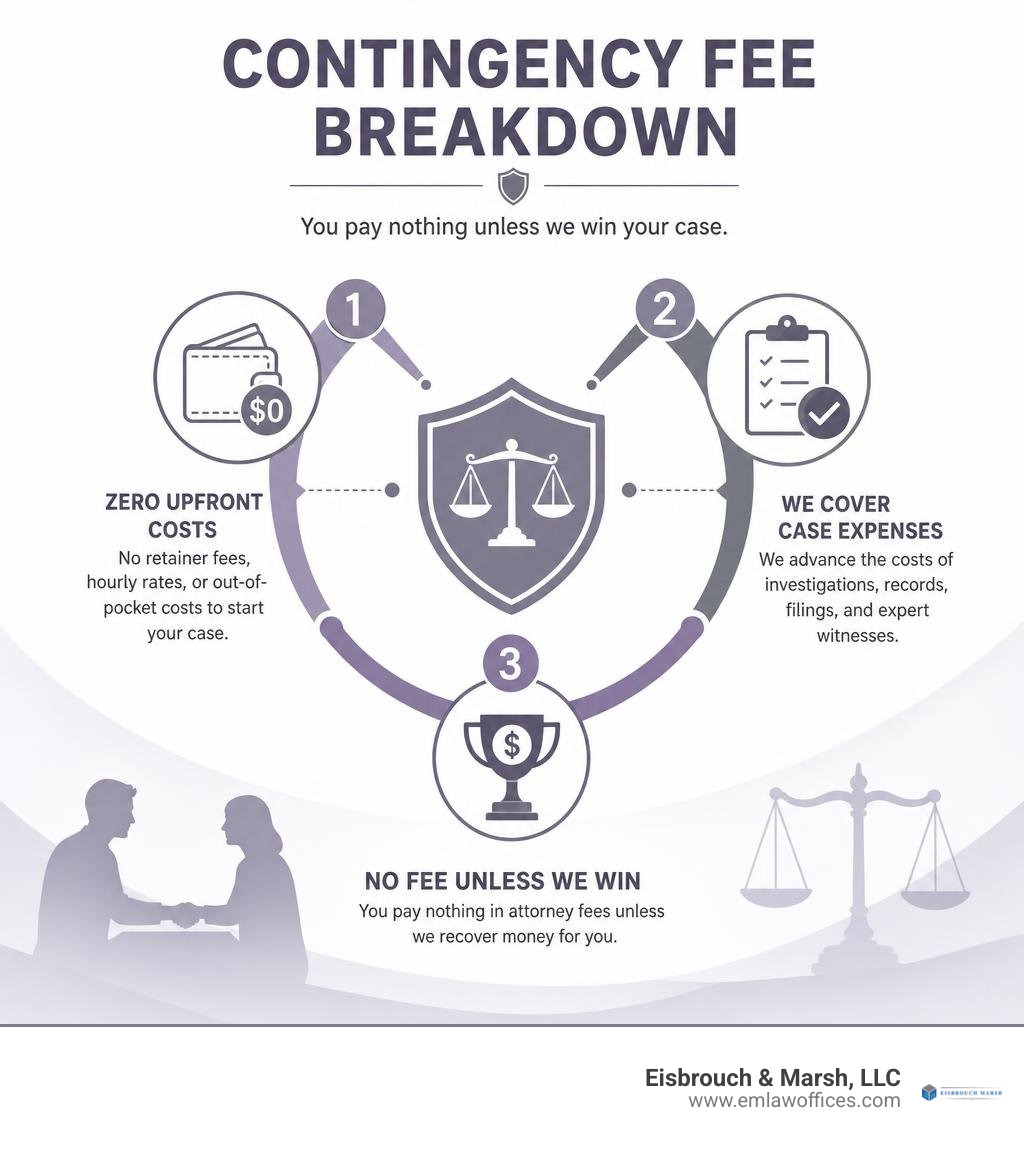
This structure means:
- Zero Upfront Costs: You do not pay any legal retainer, hourly rates, or out-of-pocket consultation fees to get your case started.
- We Cover Case Expenses: Our law firm advances all necessary litigation costs, such as obtaining official police reports, securing medical records, filing court documents, and hiring expert witnesses.
- No Fee Unless We Win: You owe us absolutely nothing in attorney fees unless we successfully recover money for you through a negotiated settlement or a jury verdict.
If we win your case, our legal fee is paid as an agreed-upon percentage of the final recovery. This aligns our interests directly with yours—the hard work we put into maximizing your payout directly benefits both you and our team.
Key Steps to Take After a Collision and When to Call an Attorney

The moments immediately following a car crash are frantic and chaotic. However, the physical evidence you secure and the statements you make in the hours and days after a collision directly impact your ability to recover financial compensation later. National crash data from the National Highway Traffic Safety Administration also underscores how frequently serious collisions occur and why careful documentation matters after any wreck. Understanding motor vehicle accidents in the united states highlights how common these life-altering events are and why structured post-crash actions matter so much.
What to Do Immediately After a Crash
To protect both your physical well-being and your legal rights, follow these crucial steps right after a collision:
- Check for Injuries and Call 911: Prioritize safety. Move your vehicle out of active traffic if possible, check for physical harm, and request emergency medical assistance and law enforcement immediately.
- Obtain an Official Police Report: Ensure responding police officers document the scene and file a formal crash report. This document contains vital neutral assessments, officer observations, and citation records.
- Document the Crash Scene Thoroughly: Use your smartphone to take photos and videos of all vehicle positions, visible property damage, skid marks, road conditions, traffic control signals, and any visible physical injuries.
- Exchange Contact and Policy Details: Gather full names, phone numbers, driver’s license numbers, vehicle registration details, and insurance policy info from every driver involved. Avoid discussing who caused the crash or apologizing at the scene.
- Collect Witness Information: Bystanders, pedestrian witnesses, or other motorists who saw the crash offer invaluable third-party testimony. Collect their names, phone numbers, and email addresses.
- Seek Immediate Medical Evaluation: Even if you feel fine due to adrenaline, undergo a complete medical exam right away. Many severe injuries–such as soft-tissue damage, internal bleeding, and concussions–take hours or days to manifest. Prompt care links your injuries directly to the accident.
- Notify Your Auto Insurance Provider: Report the accident to your own insurance provider factually, but refrain from providing recorded statements to the other driver’s adjuster until you speak with an attorney.
When to Hire an Auto Accident Claims Lawyer in New Jersey
While minor property-only fender benders can sometimes be handled directly through insurance, involving a skilled attorney becomes essential under several common scenarios:
- Severe or Permanent Bodily Injuries: If you suffered bone fractures, spinal trauma, head injuries, or conditions requiring surgery, hospital stays, or ongoing physical therapy.
- Disputed Fault or Liability: When the at-fault driver denies causing the crash or their insurance adjuster claims you were responsible.
- Disagreements Over Claim Value: If an insurer offers a lowball settlement that fails to cover all your medical expenses and missed work days.
- Accidents Involving Multiple Vehicles or Commercial Trucks: Complex collisions involving semi-trucks, delivery vans, or multiple cars require comprehensive investigations into corporate liability and multiple insurance policies.
- Bad Faith Insurance Delays: When an insurance provider repeatedly stalls your claim, ignores phone calls, or unfairly rejects valid medical bills.
Handling Uninsured and Underinsured Driver Claims
Discovering that the driver who hit you has no auto insurance–or carries only minimum legal liability limits–can be deeply discouraging. State insurance statistics reveal that a significant percentage of drivers operate vehicles without mandatory liability coverage. For example, in states like Illinois, roughly 16.3% of drivers were completely uninsured in 2023.
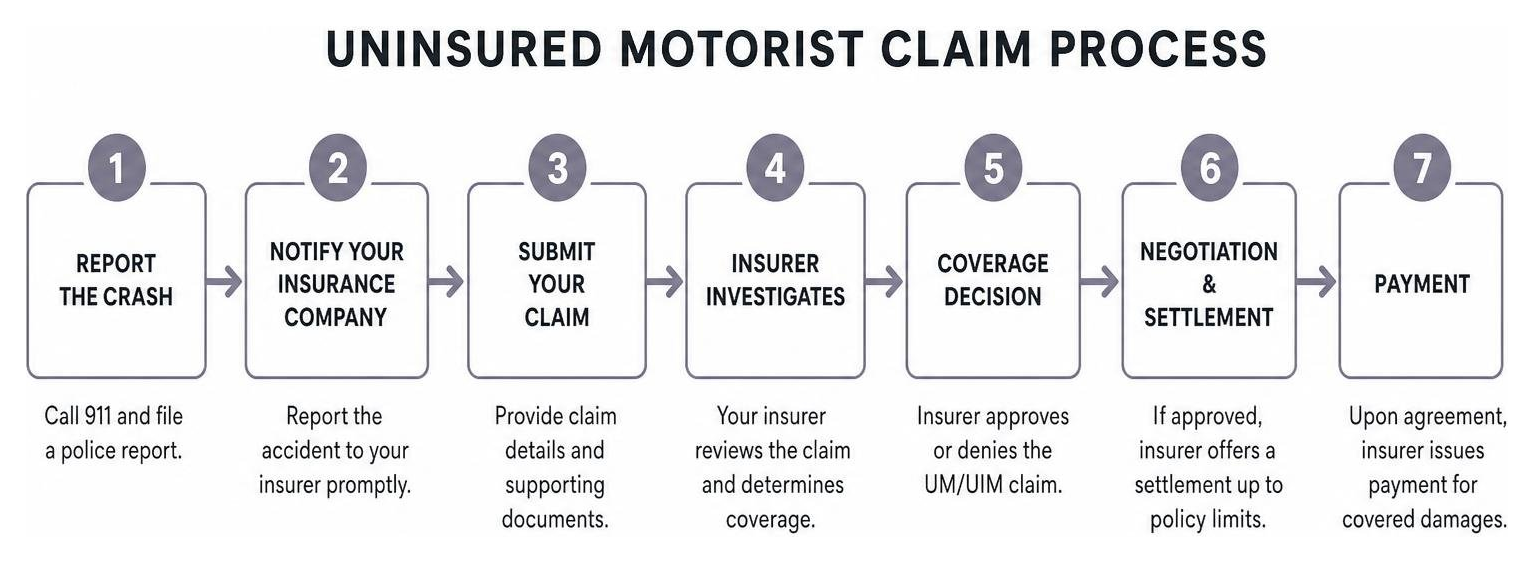
When involved in a hit-and-run crash or a collision caused by an underinsured motorist, you can turn to your own insurance policy’s Uninsured/Underinsured Motorist (UM/UIM) coverage. UM/UIM protection steps into the shoes of the at-fault party to pay for your medical expenses, lost wages, and pain and suffering up to your policy limits.
However, recovering compensation from your own insurance carrier can still be surprisingly contentious. Insurers frequently evaluate UM/UIM claims with strict scrutiny. Read our guide on how to handle a crash with an uninsured driver to learn how an auto accident claims lawyer can advocate for you against your own insurance company to secure the maximum benefits you have paid for.
Proving Fault, Injuries, and Recoverable Damages
To win a personal injury claim, your legal team must prove that another party acted negligently and directly caused your injuries. Demonstrating fault requires synthesizing physical crash data, medical records, and legal standards into a persuasive argument.

Determining Fault and Comparative Negligence Rules
Determining fault in a motor vehicle collision revolves around establishing four primary legal elements:
- Duty of Care: Every driver owes a legal duty to operate their vehicle safely and follow traffic regulations.
- Breach of Duty: The driver failed to fulfill that duty through action or inaction (e.g., speeding, running a red light, or texting while driving).
- Causation: That specific breach directly caused the collision and resulting impact.
- Damages: You suffered measurable physical, financial, or personal harm as a result.
In complex crashes, more than one driver may share responsibility. How partial fault affects your financial recovery depends on the legal standards applied in your state:
- Modified Comparative Fault: Used in the majority of states, this rule allows you to recover financial compensation as long as your proportion of fault is below a specific legal limit—typically 50% or 51%. However, your final monetary recovery is reduced proportionally by your percentage of fault. For example, if you are awarded $100,000 but found 20% at fault, you receive $80,000.
- Pure Contributory Negligence: Under this strict legal doctrine enforced in a few states (such as North Carolina), if an injured party contributes even 1% of fault to a collision, they are completely barred from collecting any compensation.
- No-Fault Insurance Rules: Certain states operate under No-Fault auto systems, where injured drivers first seek medical expense reimbursement (PIP benefits) through their own insurance regardless of who caused the crash. To sue the at-fault driver for pain and suffering in these jurisdictions, your injuries must exceed a strict legal “serious injury threshold.”
Building a rock-solid case requires combining digital evidence—such as smartphone logs, vehicle Event Data Recorders (EDRs), and traffic camera footage—with physical evidence like tire skid measurements. Learn more about building a distracted driving case with digital and physical evidence in new jersey to see how modern forensic evidence proves fault.
Common Crash Injuries and Claim Value Impact
The severity and long-term prognosis of your physical injuries play a major role in determining the overall financial value of your legal claim. Severe, permanent injuries that demand ongoing medical treatment or limit your future working capacity naturally justify higher settlement figures.
Common injuries resulting from motor vehicle collisions include:
- Whiplash and Soft-Tissue Damage: Neck strains, ligament tears, and back sprains caused by sudden acceleration-deceleration forces, frequently seen in rear-end collisions. Symptoms may take days to fully surface.
- Traumatic Brain Injuries (TBIs): Ranging from mild concussions to severe brain trauma caused by violent shaking or direct head impacts against windows and steering wheels.
- Spinal Cord Injuries and Herniated Discs: Damage to the spinal column leading to severe chronic pain, reduced mobility, or partial/full paralysis.
- Bone Fractures and Joint Injuries: Broken ribs, fractured arms, shattered legs, or hip damage requiring surgical hardware and intensive physical rehab.
- Internal Organ Injuries: Blunt force impact resulting in internal bleeding, lacerated spleens, or punctured lungs.
Understanding navigating insurance claims after personal injuries helps clarify why continuous medical documentation and strict adherence to doctor-prescribed treatment plans are essential to securing full recovery.
Types of Damages Available in Auto Injury Claims
In personal injury law, financial compensation awarded to an injured crash victim is referred to as “damages.” Compensatory damages are categorized into economic and non-economic losses.
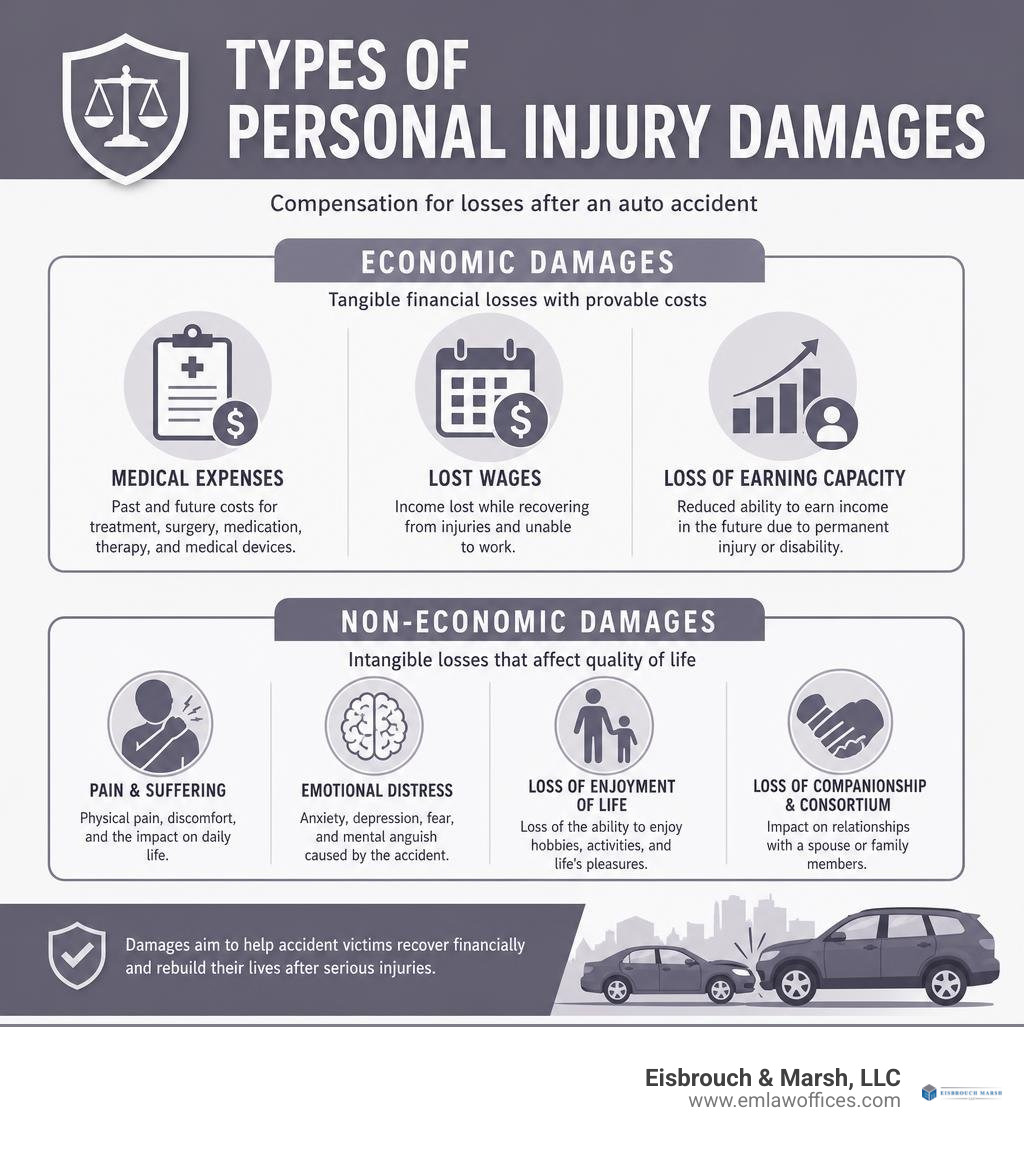
1. Economic Damages (Calculable Financial Losses)
These represent tangible, verifiable monetary losses resulting directly from the collision:
- Past and Future Medical Expenses: Hospital stays, emergency care, surgical procedures, prescription drugs, physical therapy, assistive medical devices, and expected future treatment costs.
- Lost Wages and Earned Income: Compensation for income lost while recovering from your injuries during time missed from work.
- Loss of Future Earning Capacity: Financial recovery if permanent disability prevents you from returning to your former job or working at full capacity in the future.
- Property Damage: Costs to repair or replace your damaged vehicle, along with personal belongings destroyed in the crash.
2. Non-Economic Damages (Subjective Personal Losses)
These address the profound personal and emotional toll an accident takes on your life:
- Pain and Suffering: Compensation for physical discomfort, acute pain, and chronic physical suffering caused by your injuries.
- Emotional Distress and Mental Anguish: Recovery for anxiety, depression, sleep disturbances, post-traumatic stress disorder (PTSD), and psychological trauma post-crash.
- Loss of Enjoyment of Life: Compensation for the inability to participate in hobbies, recreational activities, exercise routines, or social events you once enjoyed.
- Loss of Consortium: Damages awarded to compensate a spouse for the loss of intimacy, companionship, and support following severe injuries.
3. Punitive (Exemplary) Damages
Unlike compensatory damages, punitive damages are not meant to reimburse you for a loss. Instead, courts award them in rare cases to punish defendants who acted with gross negligence, deliberate malice, or reckless disregard for safety—such as severe drunk driving (DWI) collisions.
Explore our breakdown on understanding 3 types of personal injury damages for further details on how compensation figures are calculated.
Frequently Asked Questions About Car Accident Claims
What is the statute of limitations for filing a car accident claim in New Jersey?
In New Jersey, the general statute of limitations for a car accident personal injury lawsuit is two years from the date of the crash. If you miss that filing deadline, the court can dismiss your case and you may lose the right to recover compensation for your injuries.
There are important New Jersey-specific deadline issues to keep in mind:
- Personal injury claims: Most injured drivers, passengers, pedestrians, and cyclists have two years from the accident date to file a lawsuit.
- Wrongful death claims: If a collision causes a fatality, the estate generally has two years from the date of death to bring a wrongful death action.
- Claims involving public entities: If the crash involved a government vehicle, municipal bus, public employee, dangerous roadway condition, or another public entity, you may need to file a formal Notice of Claim within 90 days before you can pursue compensation.
- Insurance and PIP deadlines: No-fault/PIP benefits, UM/UIM claims, and insurer notice requirements can involve separate policy deadlines that may arrive much sooner than the lawsuit filing deadline.
Because these deadlines are strict and fact-specific, reaching out to an auto accident claims lawyer as soon as possible after a New Jersey crash helps ensure every required notice, insurance claim, and court filing is handled on time.
How long does it take to settle a car accident case?
There is no single “average” timeline for settling an auto injury case. The overall duration depends on several key variables:
- Medical Recovery Duration: We generally advise waiting until you reach Maximum Medical Improvement (MMI)—the point where your doctor determines your condition has stabilized or fully healed—before entering final settlement negotiations. Settling too early risks leaving future medical bills unpaid.
- Case Complexity and Liability Disputes: Clear-cut rear-end collisions with obvious fault settle significantly faster than multi-vehicle pileups where multiple insurance companies argue over percentage-based fault.
- Insurance Carrier Cooperation: Some insurance companies act reasonably and make fair settlement offers quickly, while others routinely stall, make initial lowball offers, or force formal litigation.
- Litigation vs. Out-of-Court Settlement: Claims settled directly with insurance adjusters can wrap up in 3 to 9 months. However, if an insurer refuses to make a fair offer and we file a lawsuit in court, taking a case through pre-trial discovery and trial can take 12 to 24 months or longer.
Can I still recover damages if I was partially at fault in New Jersey?
Yes. In New Jersey, you can still recover damages after a car accident if you were partially at fault, as long as your share of fault is 50% or less. New Jersey follows a modified comparative negligence rule, which means your compensation is reduced by your percentage of fault.
For example:
- If your total damages are $200,000;
- And you are found 15% at fault for the crash;
- Your recovery would be reduced by 15% ($30,000), leaving you with $170,000.
However, if you are found more than 50% responsible, you generally cannot recover compensation from the other at-fault party. Because insurance adjusters may try to unfairly increase your assigned percentage of fault to reduce or deny your claim, having an experienced NJ auto accident claims lawyer challenge those allegations is especially important in New Jersey.
Conclusion

A serious motor vehicle crash can alter the course of your life in an instant. Dealing with painful injuries, mounting hospital bills, lost paychecks, and aggressive insurance adjusters creates immense stress when you should be focusing entirely on your physical recovery.
Retaining an experienced auto accident claims lawyer provides the legal advocacy, investigative resources, and negotiation strength you need to hold negligent drivers accountable. From collecting critical crash scene evidence and proving liability to calculating future financial losses and taking uncooperative insurers to court, professional legal representation ensures you never have to fight the system alone.
At Eisbrouch & Marsh, LLC, our firm brings over 30 years of personal injury experience and high-value recovery success to every client we serve. Based in Hackensack, New Jersey, we handle motor vehicle accident cases on a contingency fee basis—meaning you pay zero legal fees unless we win your case.
If you or a loved one was injured in a collision, take the first step toward securing the financial recovery you deserve. Contact our team today for a free, no-obligation case evaluation by visiting our dedicated page on pursuing legal representation after a crash. Let our family stand up for yours.