
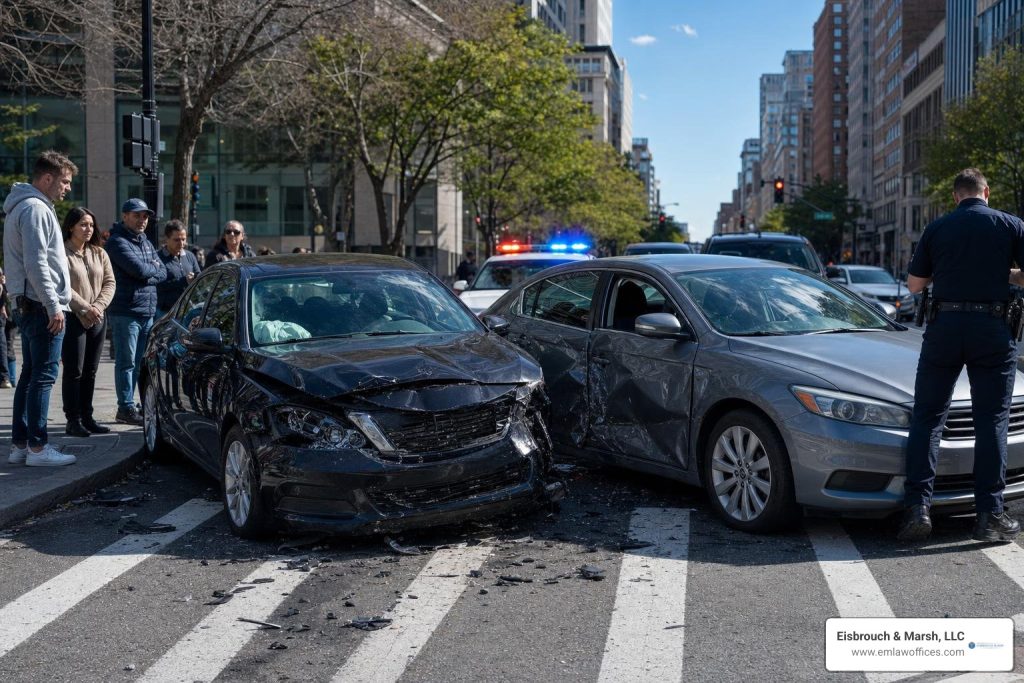
An Uber personal injury lawyer helps crash victims recover full compensation by navigating tiered commercial insurance coverage, preserving critical telematics data, and holding negligent drivers or corporate entities accountable. Whether you are an injured passenger, pedestrian, bicyclist, or occupant of another vehicle, an attorney identifies the driver’s operational insurance phase at the moment of impact to secure maximum compensation for medical bills, lost wages, and pain and suffering.
Rideshare services have fundamentally altered modern transportation. With millions of rides completed daily across the country, collisions involving platform drivers have become increasingly frequent. According to official safety reports published by Uber, the company reported 153 motor vehicle accident fatalities across its network in 2022 alone, with driver actions contributing to at least 43 percent of all fatal incidents.
When a collision occurs, victims face an intricate web of legal and insurance hurdles. Unlike traditional two-car collisions, a rideshare accident introduces commercial policies, independent contractor classifications, digital telematics, and multi-party liability questions. Determining who pays for your medical bills and lost wages requires deep technical insight into the rideshare claims ecosystem.
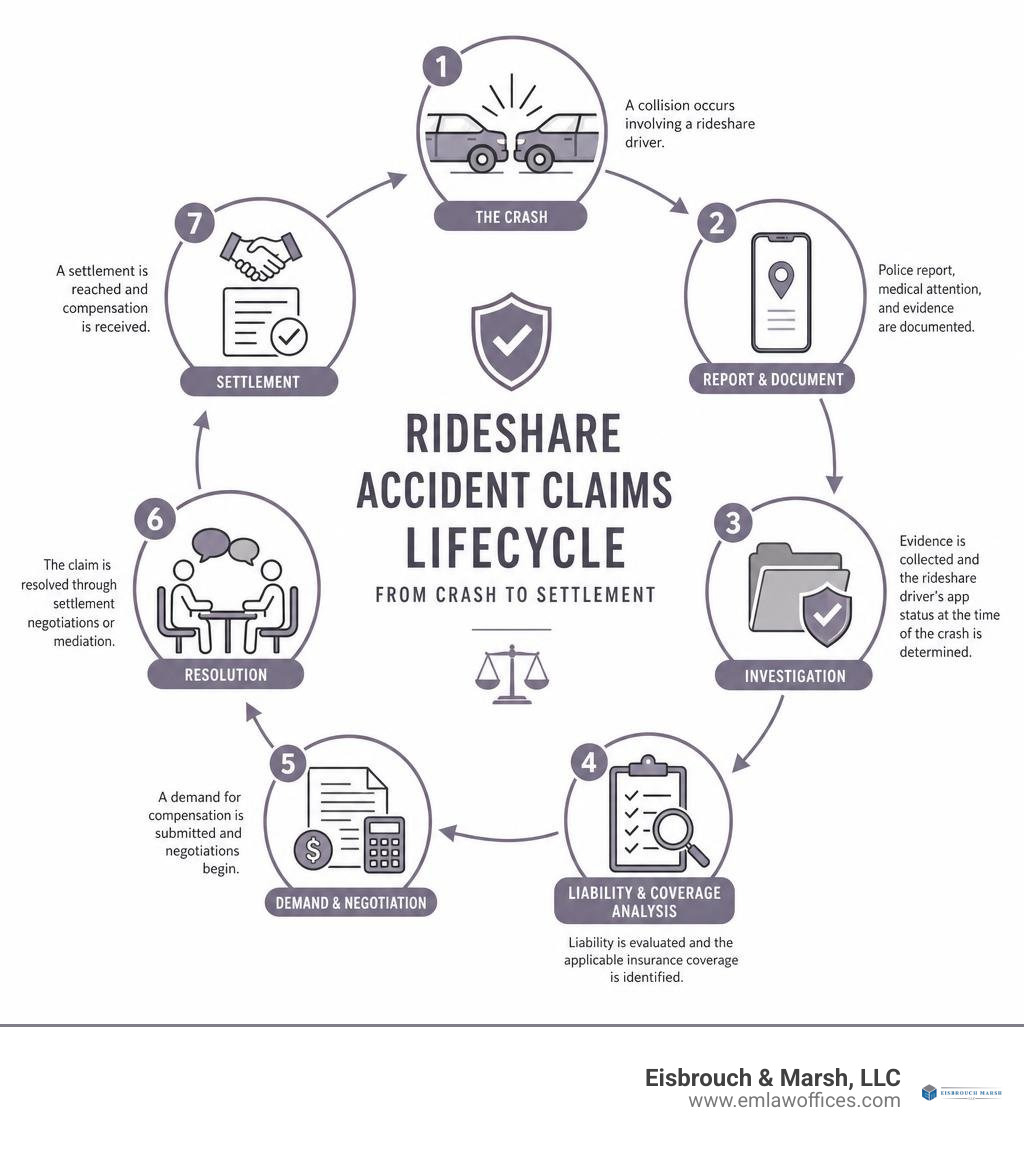
Rideshare Liability and the Three Insurance Phases

The central factor distinguishing a rideshare crash from a standard motor vehicle collision is the digital status of the rideshare mobile application at the exact second of impact. Rideshare networks do not provide continuous commercial coverage for their drivers around the clock. Instead, coverage activates in distinct tiers dictated by transportation network company (TNC) laws.
Successfully navigating insurance claims after personal injuries requires establishing the driver’s exact operational phase.
| Coverage Phase | Driver App Status | Primary Applicable Insurance | Bodily Injury Limits | Property Damage Limits |
|---|---|---|---|---|
| Period 0 | App Turned Off (Offline) | Driver’s Personal Auto Insurance | Driver’s Policy Minimums | Driver’s Policy Minimums |
| Period 1 | App Active, Awaiting Ride Request | Uber Contingent Liability Policy | $50,000 per person / $100,000 per accident | $25,000 |
| Period 2 | Ride Accepted, En Route to Pickup | Uber Commercial Liability Policy | Up to $1,000,000 combined single limit | Up to $1,000,000 combined |
| Period 3 | Passenger Onboard, Transit in Progress | Uber Commercial Liability Policy | Up to $1,000,000 combined single limit | Up to $1,000,000 combined |
Period 1: App Active While Awaiting a Ride Request
Period 1 begins when a driver logs into the rideshare application, toggles their status to available, and waits for the system to assign a trip. During this window, the driver is actively seeking fares but has not yet accepted a request.
If a collision occurs during Period 1, standard personal auto insurance policies will almost universally deny coverage because nearly all consumer auto policies contain a “commercial use” or “livery” exclusion. To bridge this gap, state statutes require Uber to provide contingent liability coverage. This policy provides up to $50,000 per person for bodily injury, $100,000 total bodily injury per accident, and $25,000 for property damage. However, this coverage is contingent, meaning it applies primarily when the driver’s personal policy formally denies the claim.
Periods 2 and 3: En Route and Transporting Passengers
The moment a driver accepts a ride request on their screen, the collision enters Period 2. This phase continues while the driver navigates to the passenger’s pickup location. Period 3 begins the moment the passenger enters the vehicle and ends when the physical drop-off is completed in the app.
During Periods 2 and 3, Uber’s comprehensive $1 million commercial liability insurance policy attaches. This policy serves as the primary coverage for injuries sustained by passengers, occupants of other vehicles, and pedestrians when the rideshare driver is at fault. Additionally, this coverage tier includes uninsured and underinsured motorist (UM/UIM) protections, which provide crucial financial recovery if a third-party motorist causes the crash and lacks adequate coverage. Understanding how to handle a crash with an uninsured driver is essential for safeguarding your compensation when negligent motorists flee the scene or carry insufficient policy limits.
Why You Need an Uber Personal Injury Lawyer After a Crash
Pursuing a claim against a massive transportation corporation is fundamentally different from filing a claim against a private motorist. Rideshare companies maintain dedicated corporate defense teams and adjusters whose core objective is to minimize corporate financial exposure.
When dealing with severe personal injury matters, injured victims without seasoned representation are frequently subjected to aggressive liability disputes, lowball settlement offers, or prolonged procedural delays designed to force early, inadequate settlements. Learning why you need an auto accident claims lawyer on your side helps level the playing field against corporate insurers.
Why You Need a Dedicated Uber Personal Injury Lawyer
General practice attorneys who rarely litigate rideshare matters often treat these claims like standard two-car crashes. This is a costly mistake. Rideshare cases involve interlocking insurance layers, overlapping statutory obligations, and complex user agreements.
A seasoned motor vehicle accident lawyer understands how to challenge the platform’s independent-contractor defenses, sidestep or resolve mandatory arbitration clauses embedded in the user terms of service, and pursue multi-million-dollar coverage tiers across all applicable commercial layers.
How an Uber Personal Injury Lawyer Investigates Digital Telematics and App Data
Digital evidence is the lifeblood of a rideshare injury claim. Unlike standard vehicular accidents, where liability rests on witness testimony and physical skid marks, rideshare cases generate hundreds of data points every minute:
- App Interaction Data: Records showing whether the driver was interacting with the rideshare interface, accepting new ride dispatches, or adjusting route settings immediately prior to the crash.
- GPS and Telematics Records: Precision location tracking, speed timestamps, and sudden acceleration or braking indicators logged by the application’s backend infrastructure.
- Trip Status Metadata: Concrete server logs proving the exact second the driver entered Period 1, 2, or 3.
Because rideshare platforms routinely overwrite or purge routine telemetry data over time, an attorney must immediately issue formal spoliation letters to the parent company, demanding the strict legal preservation of all electronic trip logs, GPS records, and internal driver safety reports.
Critical Steps and Medical Evidence Following a Collision

The actions taken in the immediate aftermath of a collision directly influence the financial viability and legal strength of your claim. Establishing an unbroken chain of medical documentation and preserving objective physical evidence must happen without delay. Reviewing the essential actions to take after a car accident ensures that critical evidence is preserved from day one.
Immediate Actions and Documenting the Scene
If you are physically able to do so safely at the scene of the collision, take the following steps to protect your health and legal rights:
- Call 911: Ensure police officers and emergency medical personnel respond to create an official police collision report.
- Capture Digital Screenshots: Immediately take screenshots of your active ride screen, the driver’s profile, vehicle details, and the in-app route map before the trip concludes or the screen disappears.
- Photograph All Evidence: Take extensive photographs and video footage of vehicle positions, structural damage, skid marks, traffic signals, weather conditions, and visible bodily injuries.
- Identify Witnesses: Obtain names, telephone numbers, and email addresses from any eyewitnesses, bystanders, or other passengers.
- Report the Incident Factually: Report the accident through the rideshare platform’s safety section using brief, strictly factual statements without guessing at speeds or fault.
- Decline Recorded Statements: Never provide recorded audio statements or sign broad medical authorization waivers for corporate insurance adjusters before consulting legal counsel.
Recognizing Delayed Symptoms and Preserving Treatment Continuity
Adrenaline surges during a traumatic motor vehicle crash frequently mask severe internal injuries. Victims often feel fine initially, only to experience debilitating pain days or weeks later. Understanding delayed pain after a car accident is vital for identifying underlying trauma before permanent harm sets in.
Common injuries that feature delayed symptom onset include:
- Traumatic Brain Injuries (TBI): Concussions, subdural hematomas, and post-concussion syndrome presenting as delayed brain fog, dizziness, migraines, or mood changes.
- Spinal Disc Herniations: Cervical and lumbar disc protrusions causing progressive nerve impingement, numbness, tingling, and chronic pain.
- Soft Tissue Tears: Whiplash, torn rotator cuffs, and ligament damage that worsen as local inflammation peaks.
Seeking a comprehensive medical evaluation within 72 hours of the crash creates an undeniable link between the collision and your injuries, preventing insurers from claiming that your condition was caused by a preexisting issue or an unrelated subsequent event. When health insurance coverage is limited, we assist clients in securing high-quality care through medical liens, ensuring medical providers receive payment directly from the final legal settlement rather than out of the patient’s pocket.
Calculating Damages and Legal Liability in Rideshare Claims
Calculating the full value of a rideshare claim involves far more than simply adding up current emergency room bills. A complete financial assessment must account for long-term functional impairment, future medical needs, and psychological trauma. Pursuing justice after a car accident requires building an exhaustive damages model supported by medical economists, vocational experts, and life care planners.
Working alongside a seasoned attorney for car insurance claims, winning your dispute ensures every economic and non-economic harm is accounted for during settlement negotiations.
Assessing Economic and Non-Economic Damages
Recoverable damages in a rideshare personal injury lawsuit are divided into two core categories:
- Economic Damages (Tangible Financial Losses):
- All past, ongoing, and future medical expenses (surgeries, physical therapy, prescription medication, medical equipment).
- Lost wages for missed time from work.
- Diminished future earning capacity and lost vocational advancement if permanent disabilities prevent you from returning to your prior career.
- Out-of-pocket costs, such as medical travel expenses, home modifications, and household assistance services.
- Non-Economic Damages (Intangible Subjective Losses):
- Physical pain, discomfort, and physical suffering.
- Severe emotional distress, depression, and post-traumatic stress disorder (PTSD).
- Permanent physical disfigurement, scarring, or loss of bodily function.
- Loss of enjoyment of life and loss of consortium (the negative impact on familial relationships).
Navigating Pure Comparative Negligence and Multi-Party Fault
In many rideshare accidents, liability does not rest solely on one individual. Collisions frequently involve multiple vehicles, shifting weather conditions, or hazardous road designs. Under standard comparative negligence doctrines, financial recovery is adjusted based on each party’s percentage of fault.
For example, if another motorist makes an illegal turn but the rideshare driver was speeding or looking down at their navigation app, liability may be split. If an injured plaintiff is determined to have 10 percent comparative fault (for example, failing to wear a seatbelt where statutory rules apply) on a $500,000 total loss, their total recovery is reduced by 10 percent to $450,000.
Additionally, liability may extend to third parties, such as automotive parts manufacturers (for defective braking systems or tire blowouts) or municipal entities responsible for poorly maintained roads with hazards.
Frequently Asked Questions About Rideshare Accidents
What should I do if the rideshare driver’s insurer denies my injury claim?
If a driver’s personal insurer denies your claim, citing a commercial livery exclusion, your attorney will escalate the claim directly to the platform’s commercial insurance carrier. By formally documenting the driver’s active app status in electronic logs, we compel the corporate carrier to extend coverage under the Period 1 contingent limits or the Period 2/3 commercial policies. If insurers engage in bad-faith settlement tactics, formal litigation can be filed immediately.
Can passengers sue the rideshare company directly for driver negligence?
While rideshare platforms historically defended claims by arguing their drivers are independent contractors, injured passengers have clear pathways to recovery. First, the company’s mandatory $1 million commercial insurance policy covers passenger injuries caused by driver negligence during active trips. Second, direct corporate liability claims can be brought directly against the platform for negligent hiring, improper background checks, failure to remove drivers with dangerous driving histories, or platform software designs that encourage driver distraction.
How long do I have to file a lawsuit after an accident?
The statute of limitations sets a strict legal deadline for filing a personal injury lawsuit. In most standard automobile negligence actions, plaintiffs have two years from the exact date of the collision to file suit.
However, critical exceptions exist: if a municipal vehicle or government entity contributed to the collision (such as a public transit bus or an unmaintained roadway defect), formal administrative tort notices must often be filed within a matter of months. Missing these deadlines permanently forfeits your right to seek legal compensation.
Contact the Experienced Uber & Lyft Accident Lawyers and Eisbrouch & Marsh for a Free Consultation.
A rideshare collision can disrupt your physical health, financial security, and peace of mind in an instant. With multi-layered commercial insurance tiers, corporate legal defenses, and complex telematics evidence at play, you should not have to face multi-billion-dollar corporations alone.
Eisbrouch & Marsh, LLC, brings 30 years of experience to every personal injury case we handle. We understand the technical, medical, and financial strategies required to maximize your recovery against rideshare corporations and commercial insurance carriers.
We represent injury victims on a strict contingency fee basis—meaning you pay absolutely no upfront legal fees, and we only collect payment if we successfully secure a financial settlement or verdict on your behalf.
If you or a loved one has been injured in a rideshare collision, contact our legal team today for a free, comprehensive case evaluation. Let us protect your rights and fight for the full compensation you deserve.